
Conference and Dinner
13th – 15th November 2026
Each year since 1990, the Society has held an annual conference – with the exception of 2020 due to Covid-19 restrictions. Leading pioneers and researchers give presentations and the Society’s various awards are given.
The Conference is open to all – it is not restricted to members only.
Non-members are most welcome.
VENUE
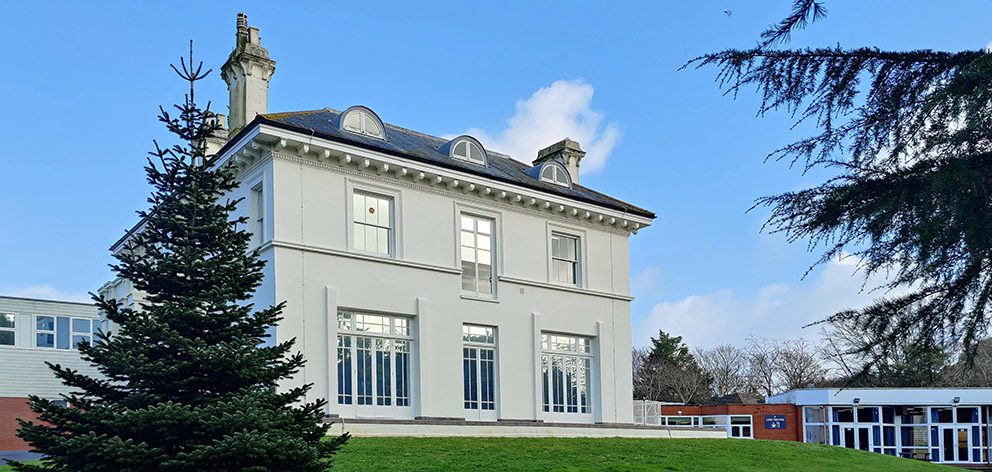
Our Conference and Dinner 2026 will be held at the Institute of Naval Medicine in Alverstoke, Gosport.
Established in 1969, the Institute of Naval Medicine is the main research centre and training facility of the Royal Navy Medical Service. It offers specialist medical training, guidance and support from service entry to resettlemen’, and provides extensive research, laboratory and clinical facilities for use across the armed services.
IMPORTANT:
1. As an operational Ministry of Defence facility only designated areas will be open to conference attendees. These will be clearly indicated.
2. Photo ID is required for admission.
3. Free parking is available for pre-registered vehicles during conference/dinner hours and must be removed at the end of proceedings – no vehicle can remain on site over night.
4. Last dates for ticket purchases are:
16 October for overseas delegates
30 October for UK resident delegates
Institute of Naval Medicine
Crescent Road
Alverstoke
Gosport
PO12 2DL
LOCATION
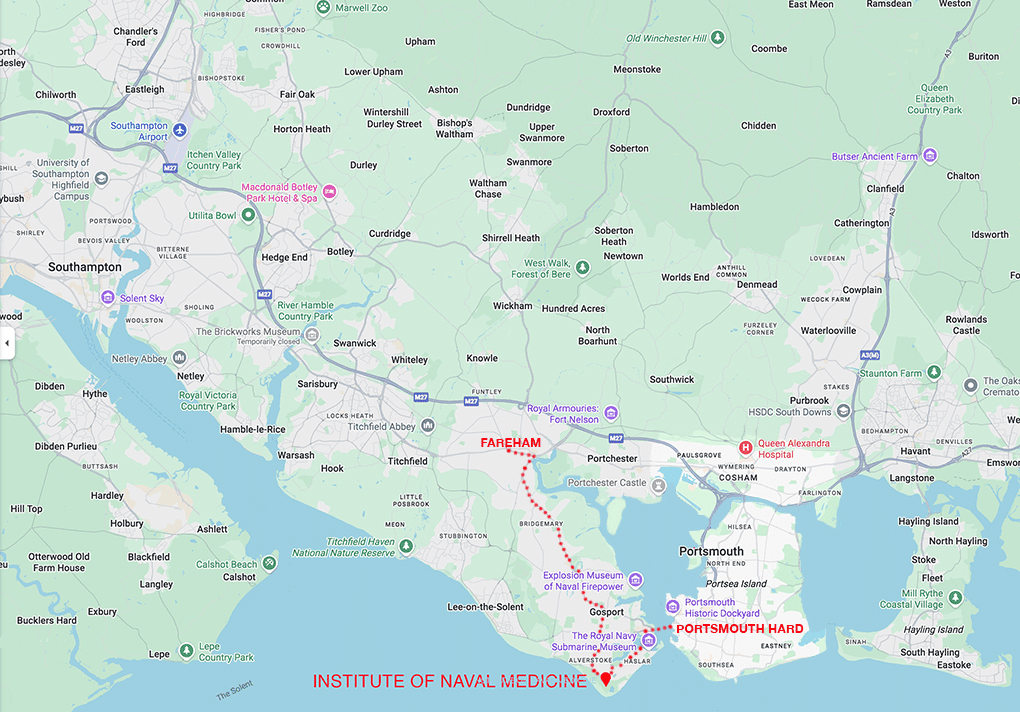
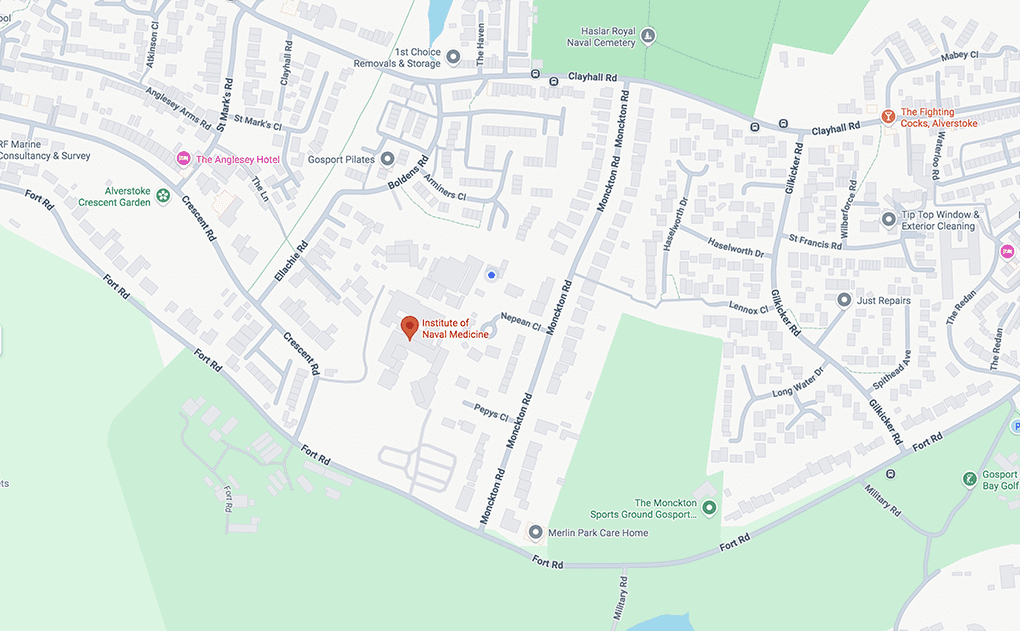
The Institute of Naval Medicine is located in Alverstoke, Gosport. It is not served directly by public transport.
GETTING THERE
BY RAIL and taxi: The nearest train stations are at Fareham and Portsmouth Harbour (sometimes called Portsmouth Hard).
From Fareham, take a taxi (a 20-minute drive).
From Portsmouth, take the cross-harbour ferry (which is adjacent to the train station).All ferry tickets are return tickets so retain your ticket for the return trip.
The venue is a 10-minute walk from the Gosport Ferry or a 3-minute taxi ride.
BY CAR:
Use the postcode PO12 2DL
(All vehicles and occupants will need to pre-register their details when purchasing tickets.
ACCOMMODATION
Tripadvisor is a good way to look for accommodation.
Generally, the earlier you book, the less expensive accommodation will be.
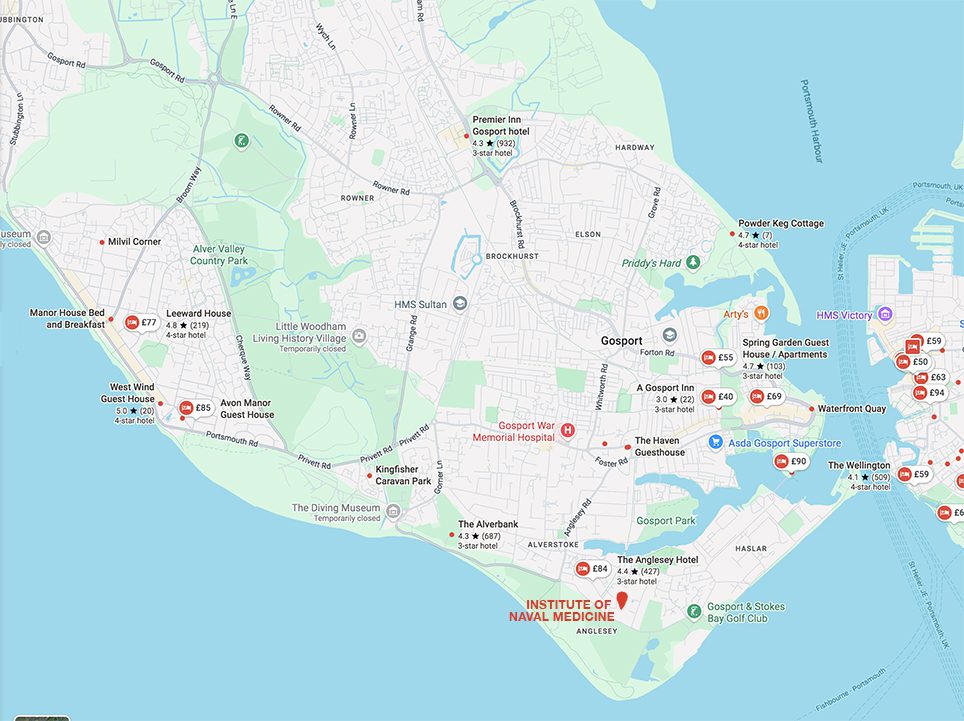
3 Closest Hotels
The closest hotel is the Anglesey Hotel; it is a 5-minute walk to the venue.
The Alverbank Hotel is a five minute walk to the Diving Museum and a 25-minute walk/5-minute drive to the venue.
The Travelodge in Gosport High Street, is a 45 minute walk. It is a 5-minute walk to the taxi rank at the Gosport Ferry end of the High Street. It is a 10-minute taxi drive to the venue.
GETTING THERE
BY RAIL: Trains from Victoria Station, London to Sutton Station; journey time approximately 35 minutes.
Turn left on exiting Sutton Station. Subsea7’s offices are a 7 minute walk away on the opposite side of the road.
BY CAR:
Parking at Subsea7: Delegates wishing to park at Subsea7 offices at 40 Brighton Road, Sutton, London, SM2 5BN must send the following details (by Saturday 15th October) to info@thehds.com
2026 Programme
PROGRAMME
Friday 13th November: INM Library Visit
The Library at the Institute of Naval Medicine contains some remarkable books including, for example, a volume of drawings made on Charles Darwin’s 1830s expedition. It is not open to the public.
Please note: The only access to the Library is via a flight of 7 steps.
Entrance is free but you must be a conference ticket holder to reserve a place.
Numbers are limited to 2 groups of 25 people.
You must bring photo ID and, if driving, please provide your vehicle details when reserving a place online.
1500 First group of 25 meet in the entrance lobby
1600 Second Group of 25 meet in the entrance lobby
Saturday 14th November: Conference
0830 Registration
0900 Chairman’s welcome and introduction of our President,
Surgeon Vice-Admiral Philip Raffaelli, CB, QHP, FRCP
0915 Introduction of Surgeon Commander Jim Sykes
0920 A Personal Perspective on Naval Diving Research in Alverstoke from 1975
1005 Questions from the floor
1015 Introduction of Clive Gale and Paul Tudor
1020 Operation Blackleg, HMS Coventry
1105 Questions from the floor
1115 Refreshment break
1145 Introduction of Dr. Nic Flemming
1150 The Mystery of the Disappearing Code for the Seabed Neanderthal Diving Site
1220 Questions from the floor
1225 Lunch break
1330 Introduction of Dr. Daisy Turnbull
1335 Vrakplunderers: Salvaging 18th-century Swedish Maritime History
1420 Questions from the floor
1425 Introduction of Dr. Nick Baker
1430 Revisiting the Laurentic’s Gold, 1917 to 1924
1515 Questions from the floor
1520 Refreshment break
1550 Introduction of Philippe Rousseau
1655 Lost in France
1640 Questions from the floor
1645 Chairman’s closing remarks and presentation of awards
1655 Drawing of the raffle
Saturday 14th November: Evening Dinner
Dress Code: Smart
1830 Doors open
1930 Welcome address
1935 Dinner is served
2130 Pass the Port
2300 Carriages
Sunday 15th November
1000 Tour of The Diving Museum, Stokes Bay Road, PO12 2QT
(A public carpark and café are right next to the museum)
Our Speakers

Nick Baker
An updated version of a presentation first made at the inaugural meeting of the Historical Diving Society at Siebe-Gorman in September 1990, drawing on material originally used by Captain G.C.C. Damant for public lectures in the 1920’s, as well as from his own private papers.
Nick Baker is the founding Secretary of The Historical Diving Society in 1990 and long-term Diving Historian. He worked for 40 years in NHS Pathology before retiring in 2018. He holds a master’s degree in the History of Britain and the First World War.
The Mystery of the Disappearing Code for the Seabed Neanderthal Diving Site
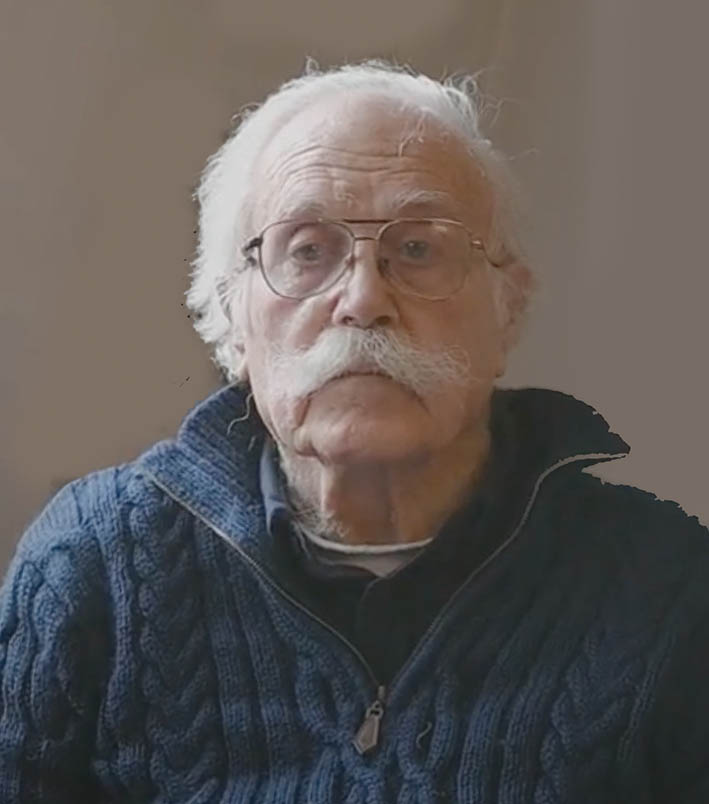
Dr. Nic Fleming
The oldest and deepest known prehistoric human occupation site on the submerged continental shelf is 100,000 years old at a depth of 20m off the French coast at Fermanville, near Cherbourg. The amazing results of ten years of diving and excavation were published in a book of 140 pages in 1988. Unfortunately the publication was so obscure that I was probably the only person outside Cherbourg who read it, and it disappeared completely from the scientific and archaeological literature. I was the only person to cite it in my publications, but I did not realise that no-one else could find it or read it. Most archaeologists still believe that nothing can survive on the sea floor earlier than about 10,000 years ago. In 2007 I started to discover what happened to the site, to the authors of the book, and how to digitise the book for the modern world of seabed prehistoric research. I visited Fermanville to check the terrain. The presentation will conclude (I hope) with a screenshot of the digitised edition of the book freely available to read on the web.
Since learning to dive on oxygen rebreathers in the Royal Marines Special Boat Service in 1956, Nic Flemming has spent over 60 years studying the long-term changes in the oceans, especially those that can be measured by observation of submerged and uplifted coastal cities and from measurements taken in submerged caves dating from the Ice Ages.
Dr Nicholas Flemming is a marine geo-archaeologist from the Institute of Oceanography at the University of Southampton. He was Director of the British national oceanographic data centre from 1980 till 1987 to take later the position of the chairman of the IODE Committee of the IOC which he occupied till 1992. He was director of the European Global Ocean Observing System until 2001.
Operation Blackleg
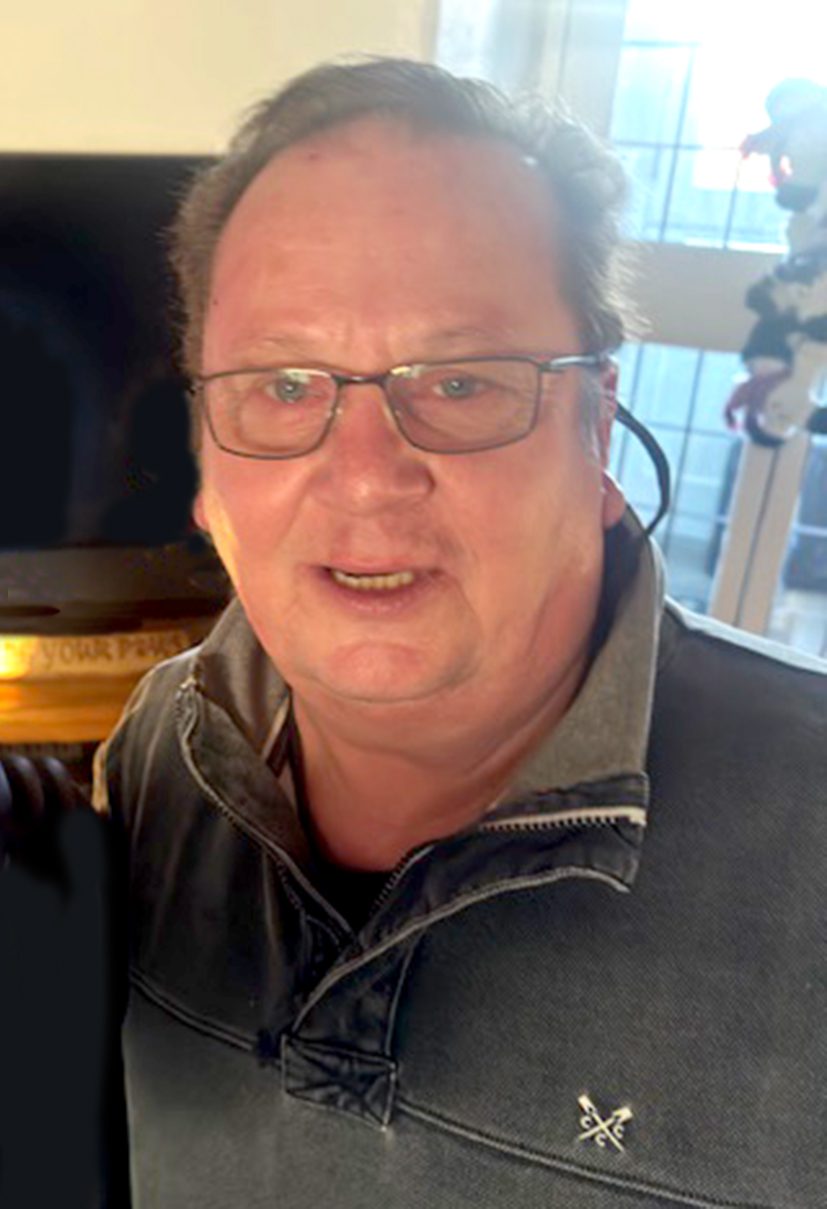
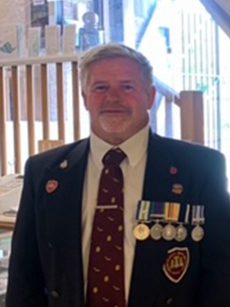
Clive ‘Windy’ Gale and Paul ‘Yorky’ Tudor
Clive Gale joined the RN in 1974 and qualified as a clearance diver in 1977. He was a member of the Saturation and Deep Trials Team in 1982 when immediately after the cessation of hostilities he was tasked to work in Operation Blackleg.
_______
Paul Tudor served in the Royal Navy for 34 years as a Clearance Diver. He also took part in saturation diving and trials.
Between 1978 and 2010 he served on mine hunters, bomb disposal teams, the saturation diving team and in Fleet Diving Units. His experience included salvage of aircraft, wreck diving surveys and the recovery of classified material from HMS Coventry in 1982/83.
He was on active service in the Falklands Campaign, the first Gulf War and in Northern Ireland.
Lost in France
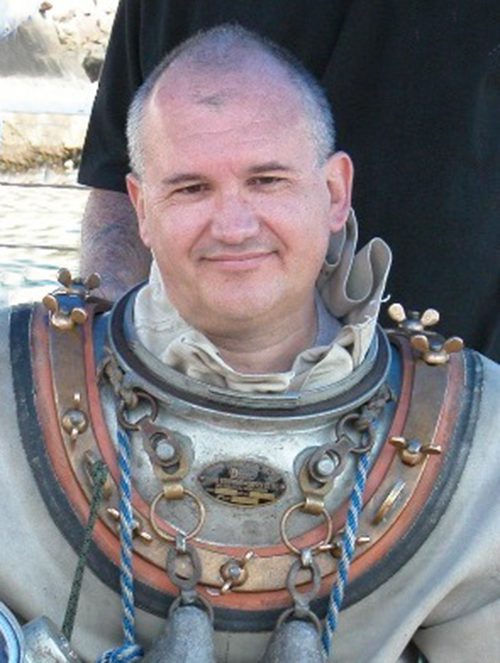
Philippe Rousseau
Philippe Rousseau’s talk is a story in two parts. The first part is in England, at the beginning of the 19th century. And the second part is in France, at the end of the 20th century. Don’t miss this unique occasion in your life to see one of the most fantastic and oldest pieces of diving equipment.
Philippe Rousseau is a retired Commandant of the French National Police. During his 28 years of services, after criminal investigations, he became the chief diving instructor for all the divers of the ‘Police Nationale’. He was also sports instructor, rifle shooting instructor, rescue first aid instructor. During his last 15 years in the French National Police, he was at the head of a flying squad, piloting planes and helicopters. He has been awarded with 10 French national distinctions.
During the 1970’s, he was commercial diver and saturation recompression chambers master. He also carried out professional diving instruction in Corsica and in Tunisia. He was the pilot-instructor for Havas Submarines Inc. and later for Seakite / Blue Deep submersibles USA. He was one of the two tests divers testing deep diving equipment for Lama company. For more than 35 years, he has been an expert witness for diving accidents and underwater investigations throughout France, and still a National Diving Instructor for the French Federation.
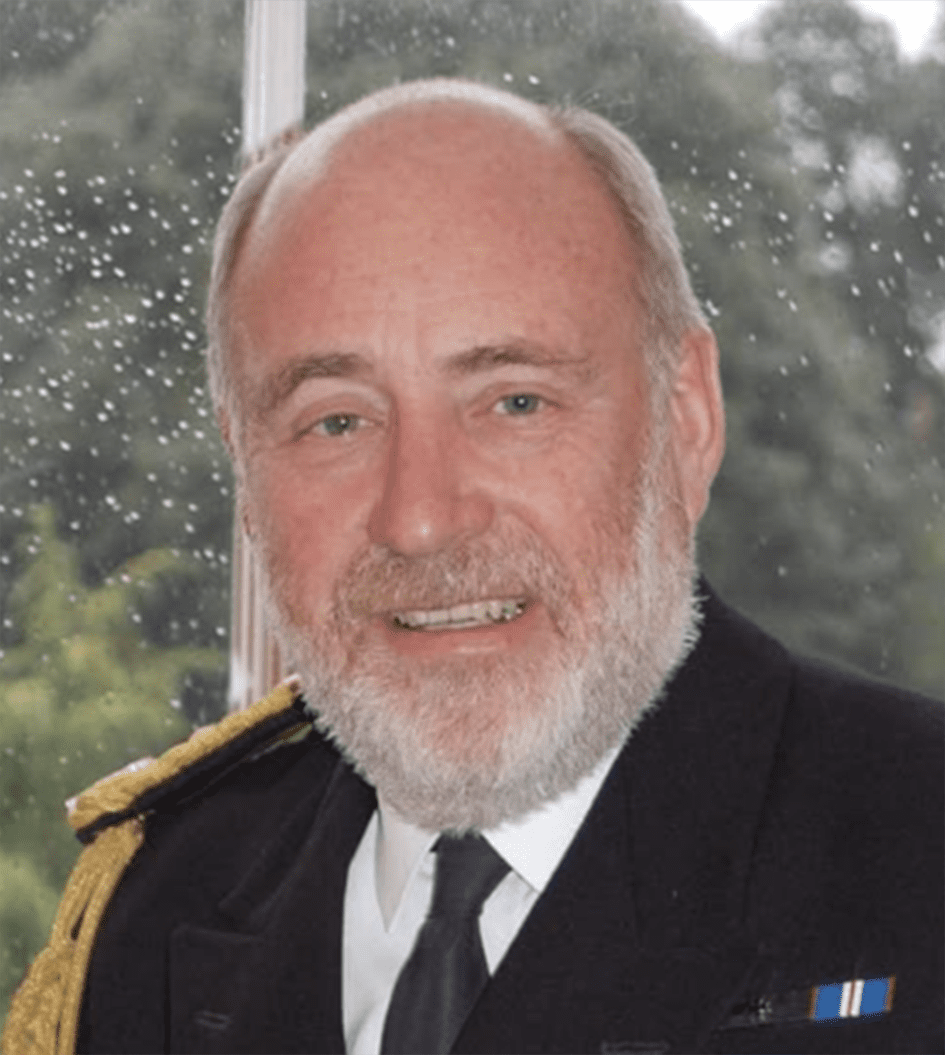
A Personal Perspective on Naval Diving Research in Alverstoke from 1975
Surgeon Commodore James Sykes
Surgeon Commodore Jim Sykes joined the Royal Navy in 1971 and specialised in diving medicine. His appointments included HMS Reclaim (1974-76), HMS Vernon (1978), NP 1007 Sat Diving Team embarked in MV Seaforth Clansman (1981-82) and the British Defence Staff in Washington, DC (1983-85). He was Head of the Undersea Medicine Division 1989-1993 and promoted to Surgeon Commodore in 2002. Jim Sykes was the Medical-Officer-in-Charge at INM (Institute of Naval Medicine) at Alverstoke for three years before leaving the Royal Navy in 2008.
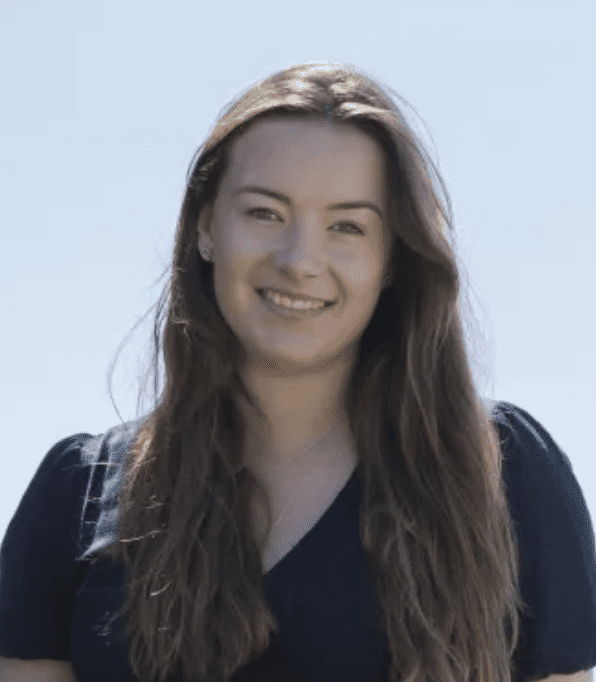
Vrakplunderers: Salvaging 18th-century Swedish Maritime History
Dr. Daisy Turnbull
In 1729, the privately owned Diving and Salvage Company (Dykeri- och Bergnings-compagniet) secured a national monopoly on sea salvage rights in Sweden, a dominance it maintained until 1803. During this period, appointed ‘Diving Commissioners’ managed operations at major seaports, including salvage auctions and were responsible for the prosecution of those seen to be infringing on their business. The company was brought into direct competition with local coastal residents accustomed to taking possession of wrecked remains in the cultural practice of ‘wrecking’ or ‘vrakplundering‘ (as it would later be known). This paper analyses legal documents and transcripts related to the prosecution of ‘vrakplunderers’ who illicitly retrieved ‘vrakgods‘ on Sweden’s western coast in the 18th century but were caught red-handed. This research addresses a previously overlooked aspect of maritime history in a Scandinavian context and brings new stories to the surface – stories which echo challenges still faced by maritime archaeologists today.
Daisy Turnbull is a maritime historian and archaeologist with a special interest in shipwrecks and coastal history. She is a member of the Centre for Port Cities and Maritime Cultures and an affiliate of the Centre of Excellence for Heritage Innovation at the University of Portsmouth. Daisy serves on the council of the Navy Records Society as Social Media Editor and holds multiple roles within the Society for Nautical Research, including within the Research and Programme committee. She has recently joined the Mariner’s Mirror Podcast team and is expanding her experience in broadcasting and public engagement.

FRIDAY 13 NOVEMBER
3pm and 4pm
LIBRARY VISIT: Free
2 tours of the Library are available on Friday afternoon at 3pm and 4pm.
Conference ticket holders may reserve a place to visit the library.
Numbers are limited to 25 per group and places will be reserved on a first come first served basis.
Please note: There is no disabled access to the Library. The only access is via a flight of 7 steps.
IMPORTANT:
Due to on site security requirements, please ensure that you reserve your place by the 16th October 2026 (Non UK residents) and 30th October 2026 (UK residents).

SATURDAY 14 NOVEMBER
8.30am – 5.00pm
CONFERENCE: £35
Conference tickets include morning and afternoon self-service refreshments, sandwich buffet lunch and free parking on site (vehicle pre-registration essential for parking).
100 tickets available.
IMPORTANT:
Due to on site security requirements, ticket sales will close on the following dates for:
Non-UK residents: Friday 16th October 2026
UK residents: Friday 30th October 2026.
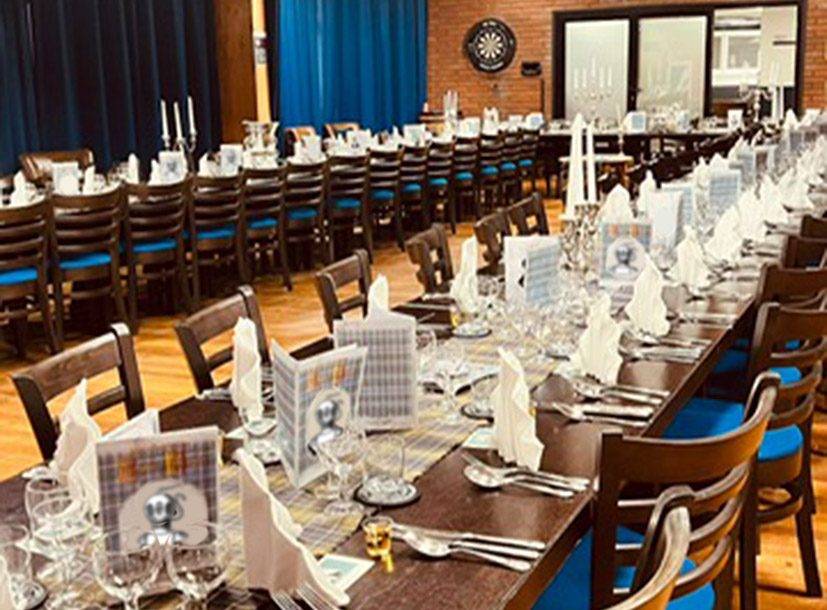
SATURDAY 14 NOVEMBER
7.30pm – 11pm
DINNER: £38
Dinner tickets include a two course dinner in the Institute’s dining room including the after dinner British Naval tradition of ‘Passing the Port’.
Drinks can be purchased from the bar at very favourable prices. Purchases are card only; the staff are unable to accept cash.
Doors open at 6.30pm for a 7.30pm dinner start.
Dress code is smart (dinner jacket).
71 tickets available
IMPORTANT:
Due to on site security requirements, ticket sales will close on the following dates for:
Non-UK residents: Friday 16th October 2026
UK residents: Friday 30th October 2026.
PLEASE NOTE: we do not issue actual tickets. By purchasing tickets your name will be added to our guest list. All you need to do is introduce yourself at the reception desk on the day and we will know to expect you.


Proceedings
The Society publishes the presentations given by the speakers at the Annual Conferences each year.